
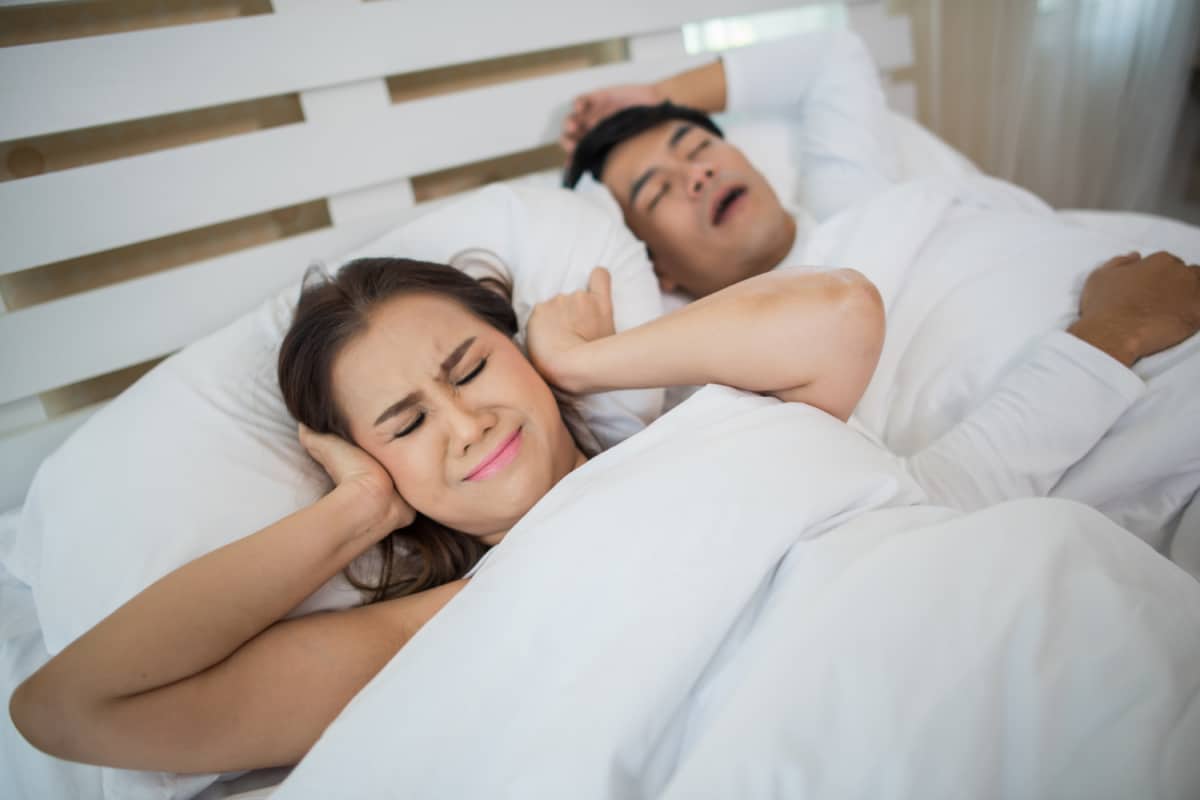
Snoring is seen as a male problem in many households, and the data backs up the stereotype. According to the American Academy of Sleep Medicine, about 40% of adult men are habitual snorers, compared to 24% of women.1
The bigger question is when snoring stops being a punchline and starts pointing to something worth investigating. Loud snoring that recurs night after night can be an early indicator of sleep apnea symptoms in men that often get missed at home.
How Male Anatomy Leads to Snoring
When it comes to what causes snoring in males, much of the difference is due to how men are physically built. Men tend to have larger necks, longer soft palates and naturally narrower airways, so once the throat muscles relax in sleep, airway collapse is more likely.
They also carry fat differently, with more of it settling around the neck and upper chest. That extra soft tissue presses on the airway from the outside. Even at a healthy weight, the baseline anatomy of a male throat carries a higher risk of obstruction than a female one.
How Hormones Shape the Gender Gap
Progesterone, which circulates at higher levels in women, acts as a respiratory stimulant. It helps keep the upper airway muscles toned during sleep and reduces the likelihood of collapse. Because men lack that hormonal buffer, their throat muscles relax more freely overnight, which is a leading cause of sleep apnea in men.
The effect is visible at menopause: snoring rates in women rise sharply as progesterone and oestrogen levels drop, bringing them closer to the rate seen in men.
Lifestyle Habits That Make Snoring Worse
While biology sets the baseline, lifestyle habits can tilt it further in the same direction. Three stand out in particular:
- Alcohol consumption relaxes the throat muscles further, and men statistically drink more than women, compounding the anatomical risk.
- Sleeping on the back lets the tongue and soft palate fall backwards, narrowing an already narrow airway.
- Higher smoking rates among men cause chronic airway inflammation, adding another layer of obstruction.
The upside is that these habits are within your control. Cutting back on alcohol, shifting to side sleeping and addressing smoking are three of the most practical ways to prevent or reduce snoring.
Sleep Apnea Symptoms in Men to Watch For
Persistent snoring becomes a clinical concern when it pairs with other signs. The most common sleep apnea symptoms in men include:
- Loud snoring broken by gasping or choking
- Witnessed pauses in breathing
- Unrefreshed mornings
- Excessive daytime sleepiness
- Waking with a headache
Men are two to three times more likely than women to have obstructive sleep apnea, yet many go undiagnosed because snoring gets normalised at home. In many Singaporean households, it’s the partner who first flags how serious the snoring has become. The person snoring rarely hears themselves, and daytime tiredness often gets blamed on work.
Book a Home Sleep Test with Sleeping Lab
Occasional snoring after a late night is common and rarely worth worrying about. However, snoring every night of the week, especially when paired with daytime fatigue, responds better to data than guesswork. Among chronic snoring solutions, a home sleep test is the most accessible place to begin. You sleep in your own bed while a portable device records your breathing throughout the night, and a specialist interprets the results.
If your partner has been complaining about the noise or you are waking up tired after a full night in bed, a home sleep test in Singapore is a practical next step. Book an appointment with Sleeping Lab to arrange an overnight recording and get a clear picture of what your breathing is actually doing at night.
References