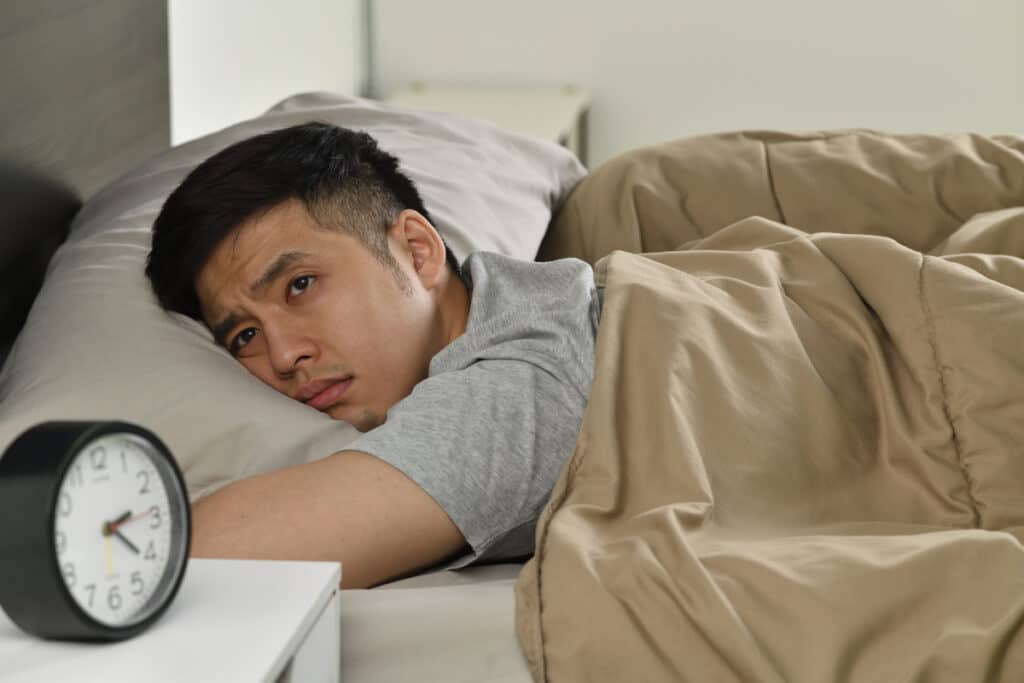
For many professionals in Singapore, balancing a high-pressure career with a healthy lifestyle feels like a tug-of-war. When the workday ends, the mind doesn’t always follow suit. You might find yourself lying in bed, staring at the ceiling, mentally rehearsing tomorrow’s meetings while your body feels exhausted but restless.
Stress and sleep are closely related. High levels of tension can ruin a night’s rest, while the resulting poor sleep leaves you even more susceptible to stress, which can quickly spiral, leading to chronic fatigue.
In this guide, we will explore why your brain stays on “high alert,” how work-related pressure affects your breathing patterns and can worsen sleep quality, and how you can take steps to sleep better despite a demanding environment.
How Does Stress Affect the Quality of Sleep?
Stress causes sleep problems by putting the body in a state of high alert that makes deep, restorative sleep much harder. When you are under pressure, your brain prioritises survival over recovery, keeping your heart rate elevated and your mind focused on potential “threats,” even if those threats are unread emails.
Here’s a breakdown on how stress disrupts your natural sleep-wake cycle and causes insomnia:
- Activation of the “Fight or Flight” Response: Stress triggers the sympathetic nervous system, shifting your body into hyperarousal. In this state, your central nervous system stays “on,” making it difficult for the brain to transition from being awake to sleep.
- Cortisol-Melatonin Imbalance: Stress causes your adrenal glands to flood your system with cortisol. This “stress hormone” is designed to keep you alert. High evening cortisol levels block the production of melatonin; the hormone responsible for telling your body it is time to sleep.
- Lighter Sleep Cycles: Even if you manage to fall asleep, hyperarousal keeps you in the lighter stages of sleep. This is why many people experience sleep problems during stress, which results in things like waking up at 3 AM with a racing mind; the body is so primed for action that the slightest internal or external stimulus causes you to jolt awake.
How to Improve Your Work Hygiene for Better Sleep
In a fast-paced city like Singapore, you may not be able to eliminate work stress entirely, but you can practice a few things to improve your “work hygiene” for better sleep.
- Use a “Worry Journal”: Spend five minutes before leaving the office or before bed to write down pending tasks or concerns. Moving them onto paper signals to your brain that it no longer needs to keep them in active memory.
- Lower Your Light Exposure Before Bed: Try dimming your lights an hour before bed to signal to your brain that the day is over. If you are a shift worker sleeping during the day, use high-quality blackout curtains to simulate a night environment.
- Rhythmic Breathing Exercises: To manually lower your heart rate and counteract insomnia due to stress, try “Box Breathing” (inhale 4s, hold 4s, exhale 4s, hold 4s) or the 4-7-8 method. These techniques help deactivate the “fight or flight” response.
- Make the Room Colder: Lowering your core body temperature is a biological trigger for sleep. Using air conditioning to keep your room between 20 – 22°C can create a more comfortable environment for sleep.
When Stress Turns into a Physical Breathing Problem That Affects Sleep
While much of the relationship between stress and sleep is discussed in terms of brain chemistry, one frequently overlooked aspect is how stress physically alters your breathing.
High-pressure environments cause you to subconsciously “brace” or tense up your upper body. Stress can increase muscle tension and alter breathing patterns while awake, and it can also worsen sleep fragmentation. Separately, some people may have an underlying tendency toward airway collapse during sleep (OSA), which becomes more noticeable when sleep is disrupted.
At the same time, stress can also shift your breathing from your diaphragm to your chest. This creates a persistent sensation of “heaviness.” Many professionals dismiss this as simple anxiety, but it may be a sign of inefficient breathing.
Over time, constant stress can lead to poorer sleep quality and aggravated symptoms for those with high risk factors for Obstructive Sleep Apnea (OSA).
Are Your Sleep Problems Caused By Stress or Something More?

While temporary stress can cause sleep problems in the short term, persistent issues may indicate that the relationship between stress and sleep has transitioned into an underlying sleep disorder. It is important to distinguish between a busy mind and a physical breathing issue.
You should consider a professional screening if you experience sleep apnea symptoms like:
- Loud, persistent snoring or gasping for air at night.
- Waking up with an exceptionally dry mouth or a sore throat.
- Feeling unrefreshed even after a full 7 or 8 hours of sleep.
A sleep specialist in Singapore like Sleeping Lab can help you find out if sleep apnea is contributing to your poor sleep alongside stress with a simple home sleep test. Learn more about getting started and how we can help you sleep better today.
Find out what else affects your sleep and sleep apnea with our other articles:
- Can Sleep Apnea Cause High Blood Pressure?
- How Your Sleeping Position Impacts Sleep Apnea